
Introduction
AI Meeting Notes can save you hours, but not all tools are equally reliable. Knowing how to record meetings correctly and generate trustworthy notes is key. In this guide, we share 5 essential tips to make your AI meeting recordings accurate and useful for study or work. With remote work, back-to-back calls, and global teams, many professionals now rely on AI to record meetings and summarize discussions automatically.
The promise is simple: no more manual note-taking, no more forgotten action items. The reality is more complex. AI notes can save time, but they can also misrepresent intent, blur accountability, and quietly introduce errors. Understanding how to use these tools effectively ensures your meetings stay productive and trustworthy.
How AI Meeting Notes recording and notes actually work
When you record meetings and get AI notes, several layers are involved:
Audio capture from the meeting platform
Speech-to-text transcription
Speaker identification (sometimes imperfect)
Summarization and action-item extraction
Each layer adds convenience—but also potential distortion. Errors early in the pipeline rarely get corrected later unless a human steps in.
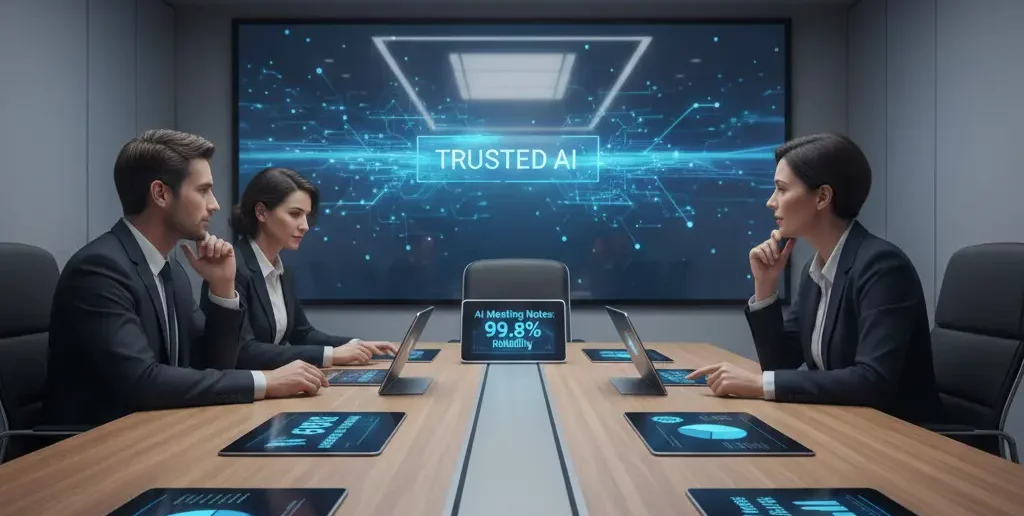
Where AI meeting notes are reliable
From practical usage across teams, AI notes are generally reliable for:
1. Factual capture
What topics were discussed
Key phrases and repeated points
Obvious next steps
2. High-level summaries
AI does well at creating quick overviews you can skim after a long day of calls.
3. Searchable archives
Recorded meetings with transcripts make it easy to find:
When a topic came up
Who mentioned a specific term
How discussions evolved over time
For reference and recall, this is a genuine advantage.
Where reliability breaks down AI Meeting Notes
This is where most problems occur.
1. Decision ambiguity
AI often struggles to distinguish:
A decision vs a suggestion
Approval vs exploration
Commitment vs opinion
A sentence like “Let’s try this” can be summarized as a firm decision when it wasn’t.
2. Ownership confusion
Action items may appear without:
Clear owners
Confirmed deadlines
This creates downstream confusion when teams act on AI-generated notes.
3. Tone and emphasis loss
AI transcripts don’t capture:
Hesitation
Pushback
Power dynamics
These signals often matter more than the words themselves.
Common mistakes teams make AI Meeting Notes
Mistake 1: Sharing AI notes without review
Fix: Always add a short human validation step before distributing notes.
Mistake 2: Treating AI notes as official records
Fix: Label them clearly as “draft” or “AI-generated summary.”
Mistake 3: Recording every meeting by default
Fix: Record selectively—especially when sensitive topics are involved.
Information Gain — why recordings increase trust but summaries reduce it
Most SERP articles focus on transcription accuracy. What they miss is summary authority. Transcripts build trust because they preserve raw information. Summaries, however, reinterpret that information. Counter-intuitive insight: teams trust recordings more, but often act on summaries more—and that’s where risk appears. The safer approach is to treat summaries as navigation aids, not conclusions.
Real-world scenario: reliable recording, risky summary AI Meeting Notes
In a planning meeting, a team discusses two options:
Option A: Safe but slower
Option B: Faster but riskier
AI summary:
Decision: Proceed with Option B
Human reality:
Option B discussed, concerns raised, no final decision
The recording was accurate. The summary was misleading. Without review, the team would move in the wrong direction.
When recording meetings and using AI Meeting Notes makes sense
This approach works well when:
Meetings are informational
You need searchable history
Decisions are confirmed elsewhere
A human reviews notes before action
In these cases, AI reduces workload without increasing risk.
When it’s not reliable enough AI Meeting Notes
Avoid relying solely on AI notes when:
Legal, financial, or strategic decisions are involved
Meetings include disagreement or negotiation
Accountability must be crystal clear
Here, AI should assist—not decide.
A safe workflow for recording with AI Meeting Notes
Use this process to balance speed and accuracy:
| Stage | Responsibility | Purpose |
| Record meeting | AI | Complete capture |
| Generate transcript | AI | Reference |
| Create summary | AI | Time-saving |
| Validate decisions | Human | Accuracy |
| Share notes | Human | Accountability |
This workflow keeps AI efficient and humans in control.
[Expert Warning]
AI meeting notes can confidently misstate decisions. Never rely on summaries alone for execution.
[Pro-Tip]
Add a “Decisions confirmed by:” line at the top of shared notes. This simple step prevents misinterpretation.
[Money-Saving Recommendation]
Free meeting-recording tools are usually enough if you export transcripts and validate summaries manually.
(Natural transition) If your workflow depends heavily on recorded meetings, choose AI meeting notes tools that allow easy transcript access and editable summaries.
How to test reliability before committing
Record a real meeting
Compare transcript with summary
Check how action items are assigned
Edit the summary and confirm edits persist
Export notes for storage
If summaries repeatedly misrepresent intent, the tool isn’t reliable enough for decision-making.
FAQs
Is it safe to record meetings and rely on AI notes?
It’s safe for reference, but decisions should always be validated by a human.
Are AI meeting summaries accurate?
They are directionally accurate but often miss nuance and intent.
Do AI tools correctly assign action items?
Sometimes, but ownership should always be confirmed manually.
Is recording meetings legal?
Laws vary by location. Always inform participants and get consent.
Should AI notes replace manual meeting minutes?
No. They reduce effort but still require human oversight.
internal link:
Embedded YouTube (contextual)
Meeting recording best practices: https://www.youtube.com/watch?v=YFz9k5E3p9Q
How to write effective meeting notes: https://www.youtube.com/watch?v=HnXK3y5oQeY
external link:
Conclusion
Recording meetings and generating AI notes is reliable for capture, reference, and search—but not for judgment or accountability. The technology works best when it reduces manual effort while leaving final interpretation to humans. Treat AI notes as drafts, validate decisions, and you’ll gain speed without sacrificing trust.