Introduction
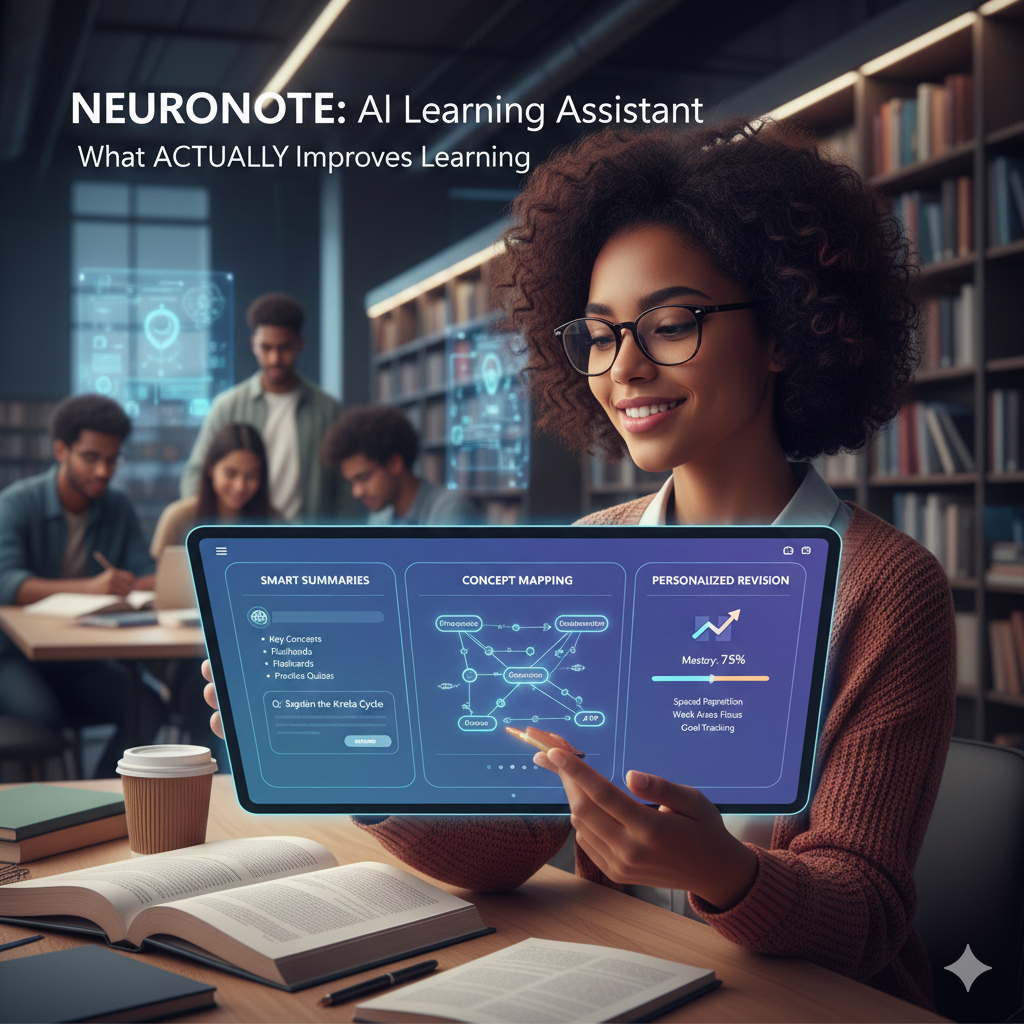
An AI notes app can help students manage heavy coursework—but only if it supports learning instead of replacing it. As lectures get denser and reading lists grow, many students turn to AI to summarize, organize, and “save time.” The problem is that shortcuts can quietly weaken understanding and exam performance. This article explains how students actually benefit from AI notes in real study situations, where the risks are, and how to design a workflow that improves clarity without creating false confidence. If you’re juggling lectures, assignments, and revision, this guide shows how to use AI notes as a learning aid—not a crutch.
How students really use AI notes app
From practical situations on campus and online classes, students use AI notes in four common ways:
- Lecture capture: Recording or importing slides and transcripts.
- Compression: Turning long material into short summaries.
- Organization: Grouping notes by course or topic.
- Revision support: Quick refreshers before exams.
The biggest gains happen in capture and organization. The biggest losses happen when compression replaces thinking.
Where an AI notes app genuinely helps students
Managing volume: AI is excellent at handling large inputs—long lectures, readings, and scattered ideas—without fatigue.
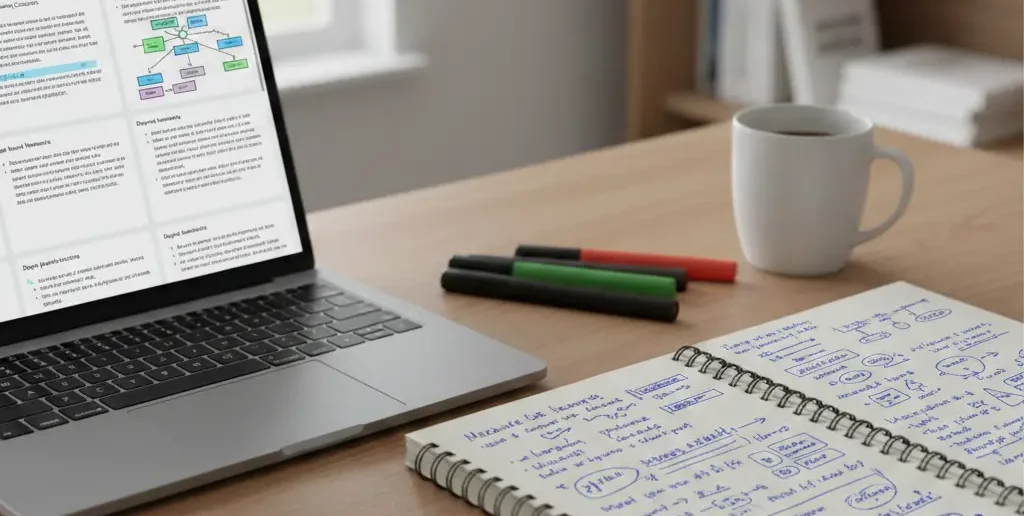
Structuring chaos: Headings, bullet points, and timelines reduce cognitive overload.
Searchable recall: Finding “that one definition” beats scrolling pages of notebooks.
In everyday study life, these strengths save time and reduce stress.

Where AI notes app quietly harm learning
Here’s what many students overlook:
- Shallow processing: Reading AI summaries feels productive but reduces memory formation.
- Over-trust: Confident language can hide mistakes or missing context.
- Passive revision: Skimming summaries replaces active recall.
Common mistake (and fix)
Mistake: Letting AI summaries become your final notes.
Fix: Use AI summaries as starting outlines. Rewrite key points in your own words before exams.
Information Gain — why AI summaries can reduce exam performance
Most top articles praise speed. They rarely mention retrieval practice, a proven learning principle. When students rely on AI summaries, they skip the mental effort that strengthens memory. Counter-intuitive tip: For exam topics, delay AI summaries until after you attempt recall. First, test yourself; then use AI to fill gaps. This preserves learning while still saving time.
Beginner mistake most students make with AI notes app
Using AI too early.
When AI organizes material before you’ve engaged with it, you lose the chance to build mental structure. In practice, students who skim first, attempt rough notes, and then apply AI perform better in assessments than those who start with AI.
A practical student workflow that works AI notes app
Here’s a balanced approach used successfully by many students:
| Study Stage | What to Do | Role of AI |
| Lecture | Take rough notes | Optional transcription |
| Same day | Review & highlight | AI suggests structure |
| Weekly | Rewrite key topics | Minimal AI |
| Exam prep | Test recall | AI fills gaps |
This keeps AI supportive, not dominant.
[Expert Warning]
Never submit AI-generated notes or summaries as original coursework unless explicitly allowed. Academic policies matter.
[Pro-Tip]
Create a “Check Before Exam” tag for AI notes you must verify manually—definitions, formulas, and dates.
[Money-Saving Recommendation]
Free AI note apps are usually enough for students if you focus on capture and search rather than unlimited summaries.
(Natural transition) If you’re choosing between tools, compare AI note-taking apps based on how well they support review and recall, not how flashy their summaries look.
How to test an AI notes app as a student
- Import one full lecture.
- Ask for a summary—then compare it with the recording.
- Rewrite one section manually and see if recall improves.
- Search for a concept a week later.
- Export notes before committing.
If the app supports these steps smoothly, it’s student-friendly.
FAQs AI notes app
Can AI notes replace lecture notes?
No. They work best as structured drafts, not final learning material.
Is using AI notes allowed in college?
Usually for personal study, yes. For submissions, always check policies.
Do AI notes help with exams?
Yes—when used after recall practice, not before.
Are AI notes accurate for academic subjects?
Often good for structure, less reliable for nuance or edge cases.
Are free AI note apps enough for students?
For most coursework, yes—paid plans help only with heavy storage or long recordings.
Embedded YouTube (contextual)
- Study science:(active recall explained)
- Student workflow:(digital note-taking for students)
Conclusion
An AI notes app can be a powerful ally for students—but only when it supports thinking instead of replacing it. Use AI to manage volume and structure, then rely on your own effort for understanding and memory. When used at the right time, AI notes reduce stress and improve clarity without sacrificing learning quality.