Introduction
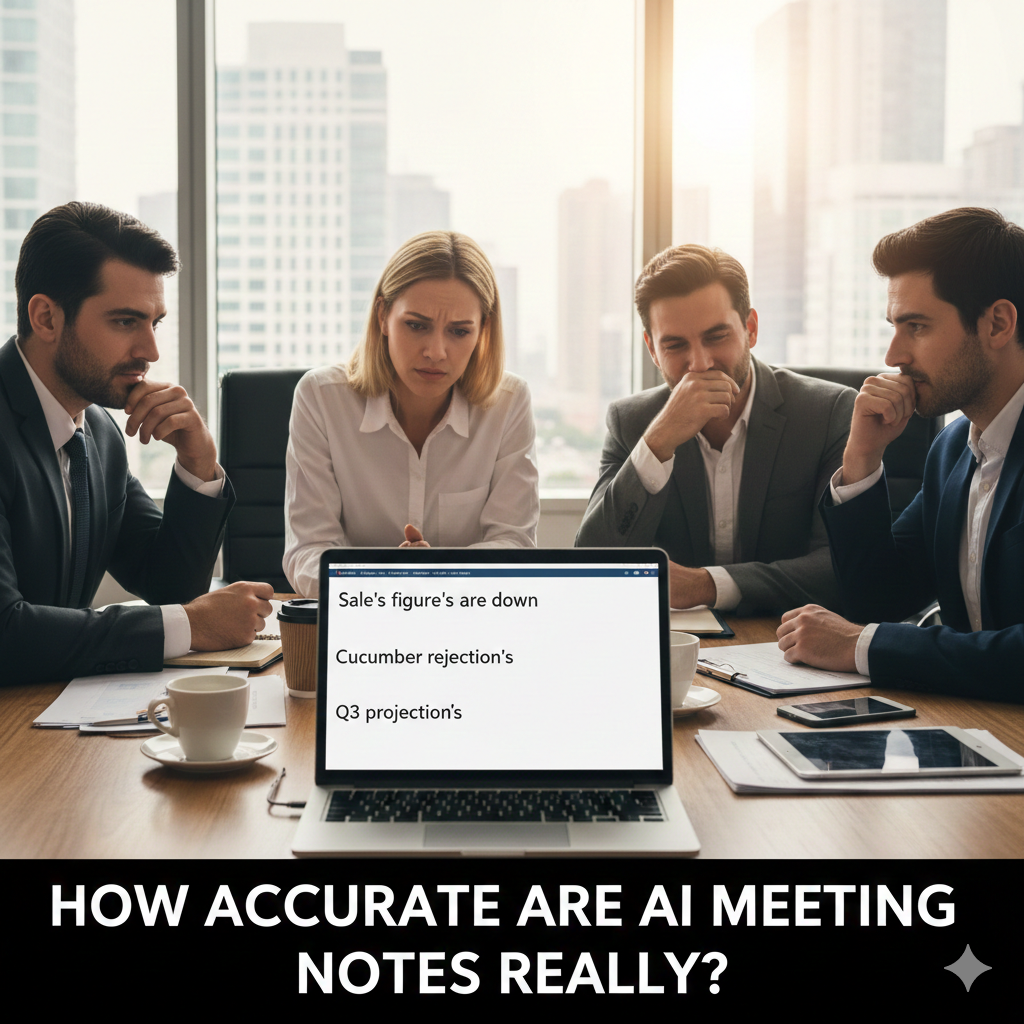
Accurate AI Notes are essential for productive meetings. By using AI tools effectively, Accurate AI Notes can help capture key points, track action items, and save time, ensuring your team stays organized and decisions are well-documented.As teams depend on automated notes to move faster, small inaccuracies can snowball into missed deadlines or wrong decisions. Accuracy isn’t a single number; it varies by audio quality, meeting dynamics, and how summaries are produced. This article breaks down where AI meeting notes perform well, where they predictably fail, and how to raise reliability with simple human checks—without losing the time savings that made you adopt them.
Why Accurate AI Notes Matter for Meetings
Accuracy in meeting notes has layers:
- Transcription accuracy – Were the words captured correctly?
- Attribution accuracy – Were speakers identified correctly?
- Interpretation accuracy – Were decisions and actions inferred correctly?
- Context accuracy – Did the notes preserve conditions and dissent?
Most tools score high on the first, uneven on the rest.
Where AI meeting notes are usually accurate
From real usage across different teams:
Transcripts in clean environments
- Quiet rooms
- Clear microphones
- One speaker at a time
Obvious action items
Phrases like “I’ll send the report by Friday” are captured reliably.
Repeated topics
If a point comes up multiple times, AI is more likely to summarize it correctly.
These strengths make AI notes excellent for reference and recall.
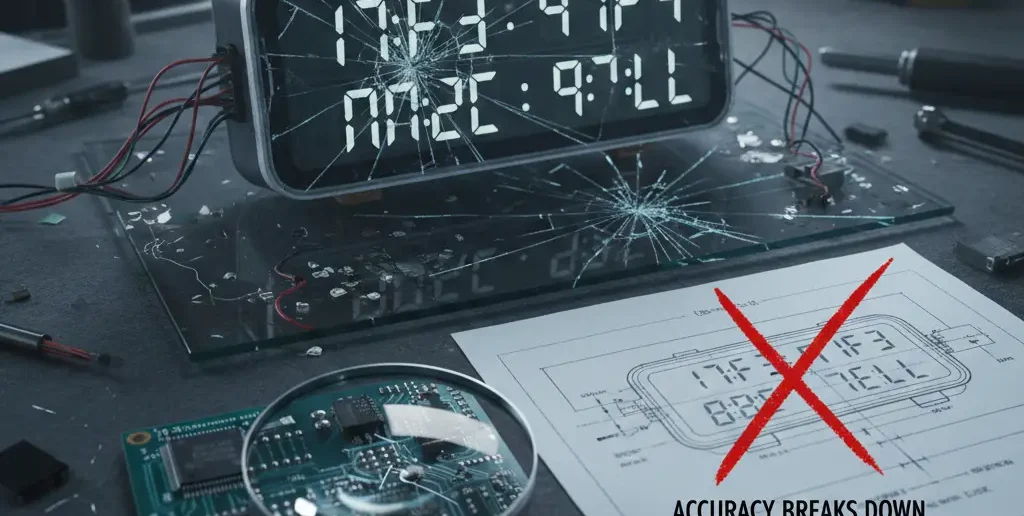
Where Accurate AI Notes breaks down
Problems appear in predictable situations:
1. Overlapping speech
Cross-talk causes missed words or merged sentences.
2. Tentative language
Words like maybe, could, let’s see often get dropped.
3. Implicit decisions
AI struggles when decisions are implied rather than stated.
4. Speaker mislabeling
Accents and interruptions increase attribution errors.
Common mistakes teams make
Mistake 1: Assuming “mostly accurate” is good enough
Fix: Validate decisions and deadlines manually.
Mistake 2: Ignoring transcript review
Fix: Skim transcripts before trusting summaries.
Mistake 3: Letting AI assign ownership
Fix: Confirm owners in follow-up messages.
Information Gain — why confident language hides errors Accurate AI Notes
Top SERP articles focus on error rates. What they miss is confidence masking. AI summaries use assertive tone even when the meeting was uncertain. Counter-intuitive insight: the more decisive a summary sounds, the more likely it removed nuance. Accuracy improves when humans reintroduce uncertainty where it existed.
Practical insight from experience: how to spot errors fast
Instead of reading everything, check these three spots:
- Decisions section – Look for overconfidence
- Action items – Verify owners and deadlines
- Numbers and names – These fail silently
This 60-second scan catches most errors.
Accurate AI Notes comparison by meeting type
Not all meetings are equal:
| Meeting Type | AI Accuracy | Risk Level |
| Status updates | High | Low |
| Planning sessions | Medium | Medium |
| Brainstorms | Medium | Low |
| Negotiations | Low | High |
| Performance reviews | Low | High |
Use AI notes more cautiously as risk rises.
[Expert Warning]
Never rely on AI meeting notes alone for legal, financial, or HR decisions.
[Pro-Tip]
Add a “Verified by” line to shared notes. It signals human accountability and raises trust instantly.
[Money-Saving Recommendation]
If accuracy is your concern, invest time in review before paying for premium “accuracy claims.”
(Natural transition) When choosing AI meeting notes tools, favor those that keep transcripts accessible and summaries editable—accuracy depends on review, not promises.
How to improve Accurate AI Notes in practice
- Use quality microphones
- Encourage one speaker at a time
- Review summaries immediately
- Edit and persist corrections
- Confirm decisions in writing
These steps improve reliability more than switching tools.
FAQs Accurate AI Notes
How accurate are AI meeting notes overall?
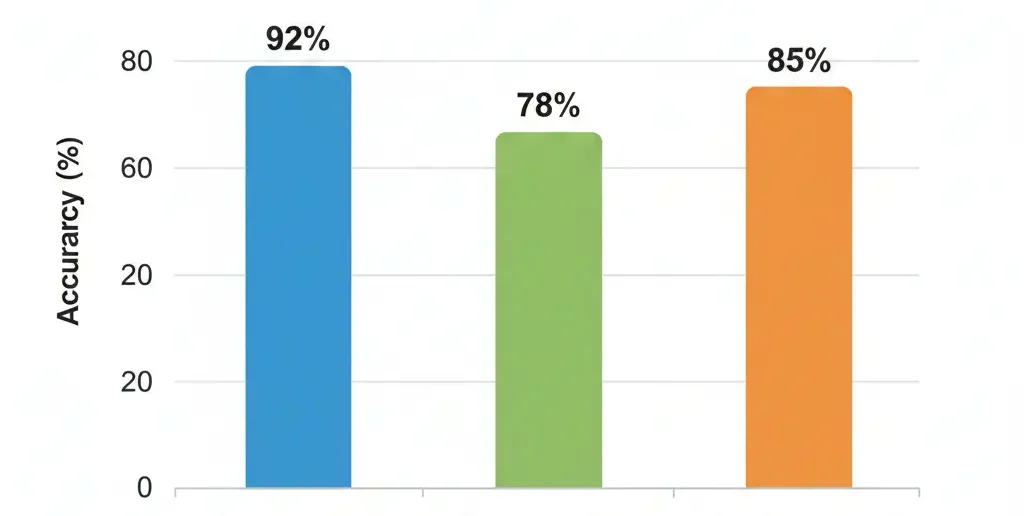
High for transcription, moderate for summaries, low for intent without review.
Do accents reduce accuracy?
Yes, especially in fast-paced discussions.
Can AI correctly identify decisions?
Only when decisions are explicit.
Are paid tools significantly more accurate?
They help with audio and features, but human review still matters most.
Should AI notes be shared externally?
Only after verification and context checks.
internal link:
Embedded YouTube (contextual)
-
- Speech recognition errors explained: https://www.youtube.com/watch?v=I0dV3fQz2H0
- Running better meetings: https://www.youtube.com/watch?v=YFz9k5E3p9Q
external link:
Conclusion
AI meeting notes are accurate enough to save time—but not accurate enough to replace judgment. They excel at capture and recall, struggle with nuance and ownership, and require human validation to stay reliable. Treat accuracy as a process, not a promise, and AI notes become a powerful assistant instead of a hidden risk.